Map User Behavior with This Behavioral Persona Tool

How does using the Behavioral Persona tool benefit you?

Design beyond function for cognitive and emotional needs
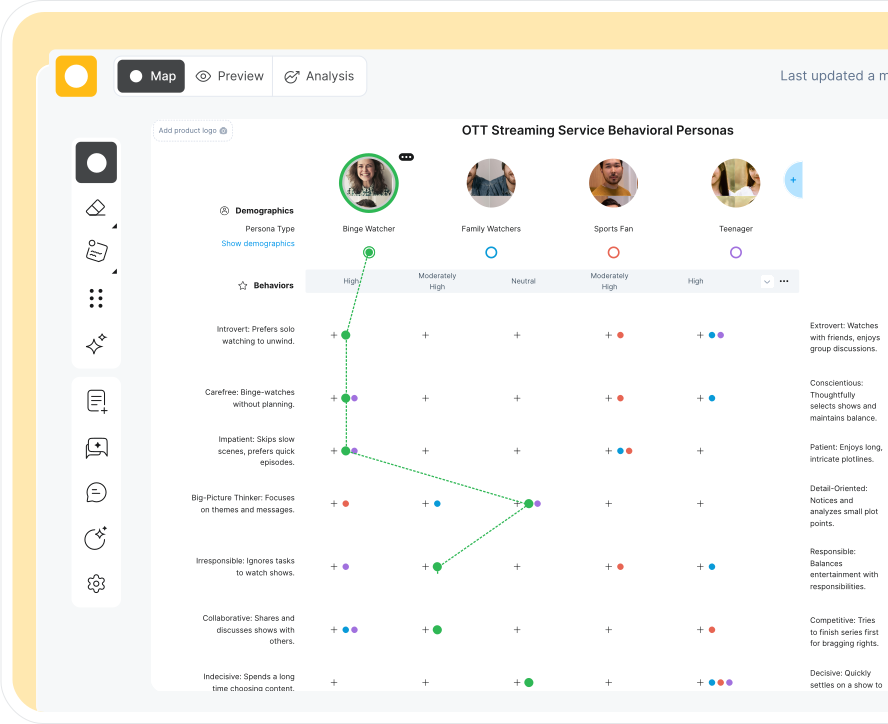
Map user behaviors on a bilateral scale. Make design decisions based on your users' behavioural and cognitive states.

Fast-track strategies and build features for specific user segments
Easily visualize user differences. Strategise and design for each segment’s behaviors and values. Ensure your product connects with all users.

Use existing user data to inform design and feature decisions
Turn existing interaction data into insight. Map user behavior, attitudes, values, etc., to guide decisions with highest ROI.

Educate stakeholders, show them users are multi-dimensional
Visually show stakeholders why your user-focused decisions matter. Highlighting user differences and tailor-made experiences to fit their unique behaviors.

Who can use this Behavioral Persona tool?


UX/UI designers
Behaviour designer
Product managers
User researchers
Agency owners


How can you use this tool to map behavioral archetypes?

Identify different users/user groups

List down important attributes- behaviour, attitudes, values, etc

Map how each user rates against your attributes

Visually and metrically compare how your users are different

Make note of differences and build accordingly

Create effortlessly with AI
How is this BuildUX Behavioral Persona tool different from others?
No more messy boards and sticky notes. Organise your information
No design skills required - focus on uncovering and strategising
Unified workplace for personas and other UX tools
Multiple user data in one project for easier comparison
Chat with your personas feature you gain a richer understanding


Features that enhance your experience
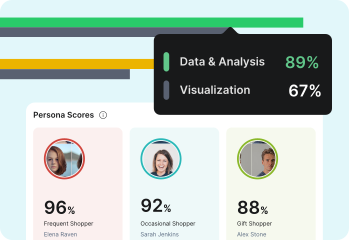
BuildUX analysis
Run comparative analytics to map users and attributes
against your product.

Notes
Make quick notes for deeper insights.
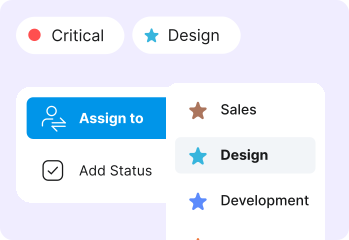
Assign tasks and add status
Highlight key insights and assign them to your team.
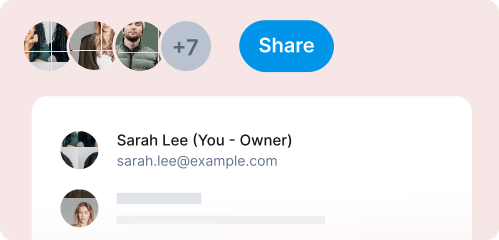
Share + collaborate
Don’t let your insights sit. Share it with your team.
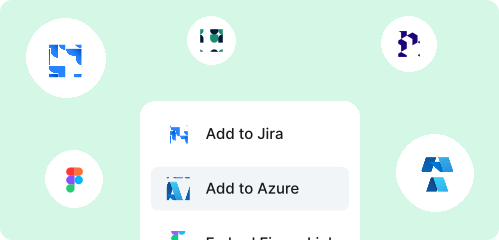
Tag insights with integrations
Add tasks to Jira or Azure and get your plan rolling.
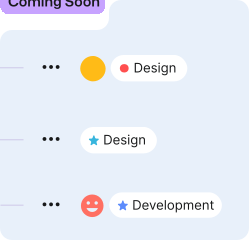
Highlight
Mark key text for quick focus later.
Try AI Behavioral Mapper Instantly
Use it for competitor research, exploring personas, or planning new initiatives.Frequently Asked Questions
What are behavioral archetypes?

Behavioral archetypes are research-driven categories that group users based on how they behave, make decisions, and interact with products rather than on demographics or job titles. They are created by identifying patterns such as motivation styles, risk tolerance, guidance needs, mental models, or preferred problem-solving strategies. Behavioral archetypes matter because behavior — not age, role, or identity — is what determines how a person experiences a product and what design decisions will help them succeed.
How to create behavioral archetypes?
Behavioral archetypes are created by collecting evidence from interviews, usability studies, analytics, support conversations, and observation to uncover recurring patterns in goals, frustrations, and decision styles across users. These patterns are clustered into groups that represent distinct ways users approach tasks — for example, decisiveness versus hesitancy, exploration versus step-by-step actions, or independence versus reliance on guidance. This matters because clustering based on behavior enables UX and product teams to design for real needs and motivations instead of making assumptions about users based on surface traits.
What are behavioral archetypes and personas?
Behavioral archetypes and personas both represent meaningful segments of users, but they differ in focus: archetypes capture how users think and behave, while personas combine behavioral drivers with contextual information such as goals, environment, constraints, and success criteria. Archetypes are often generated first to cluster behavior patterns, and personas refine these insights into complete decision-making profiles that guide UX and product prioritization. The relationship matters because strong personas are most effective when they are grounded in behavioral archetypes rather than demographics or fictional narratives.
How many behavioral archetypes do we have?
The number of behavioral archetypes depends on how many distinct behavior patterns exist in the research rather than on a predefined count. Teams typically identify between three and seven archetypes, depending on the complexity of the domain and the variation in user motivations, risk perception, and problem-solving styles. What matters is not the number but whether each archetype represents a distinctly different way of interacting with the product that requires meaningful differences in UX, guidance, hierarchy, or support.