


Better, faster, more strategic UX

© 2026 BuildUX


Better, faster, more strategic UX
© 2026 BuildUX

Confidently sequence your roadmap. Focus first on what meets most users’ needs. Cross reference with what’s easiest to build.

Focus on building features that users use most of the time. Create solutions that genuinely drive growth.

See how often and in what ways different users rely on a feature. Design improvements that meet a range of needs.

Build what is beneficial for most of your users. Ensure your team prioritizes features that have the best returns.









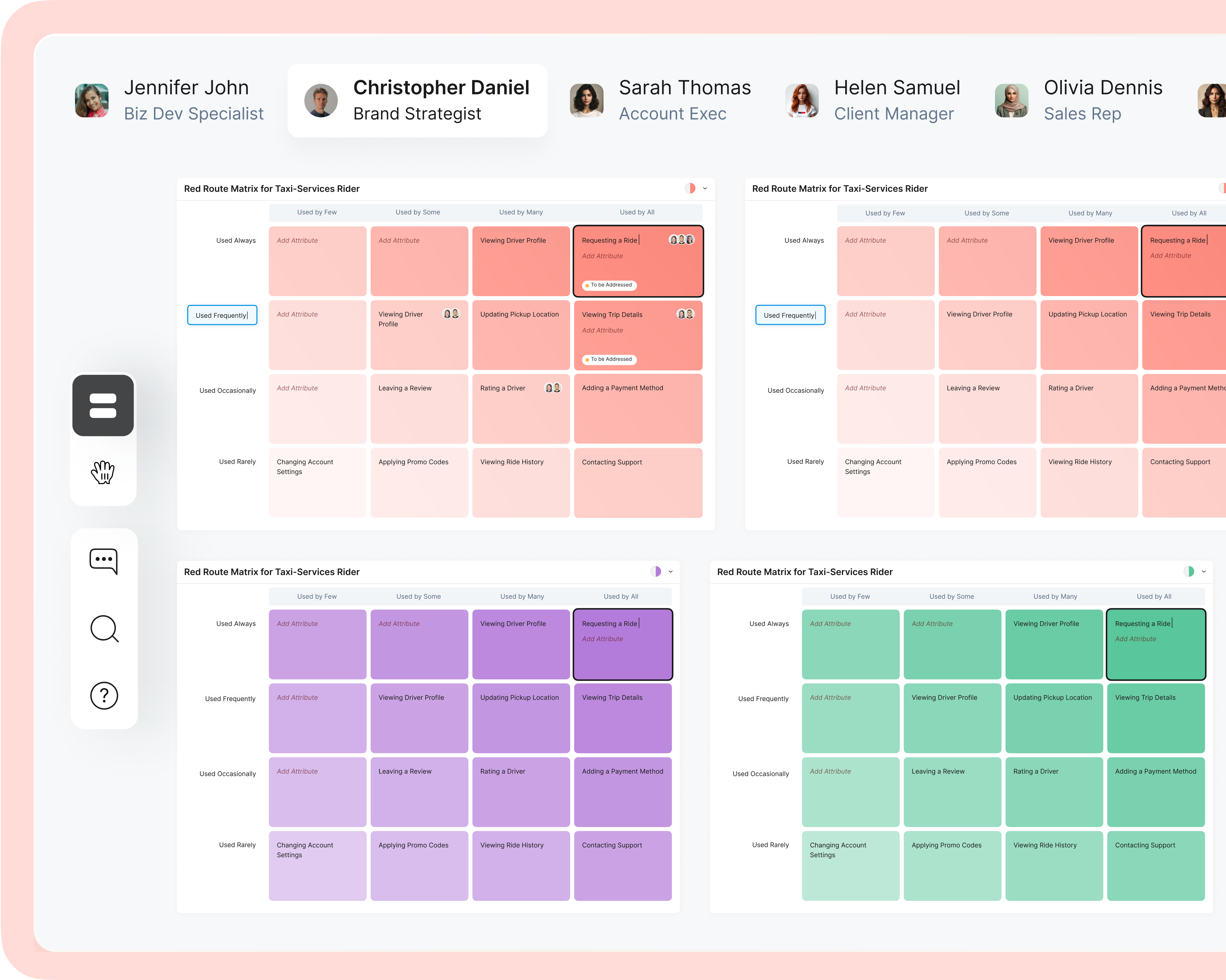

Build your matrix on
traceable usage and not
assumptions.
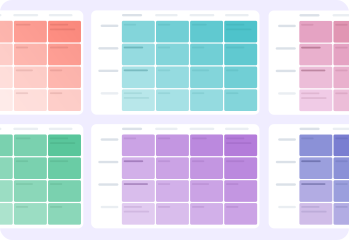
Add multiple matrices to one project for
easy comparison and better insights.

Don’t let your insights sit. Share it with your team.
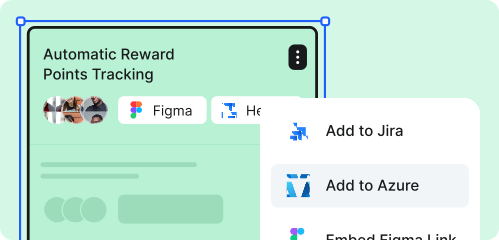
Add tasks to Jira or Azure and get your plan
rolling.

Make your matrix visually appealing - the
way you like it.
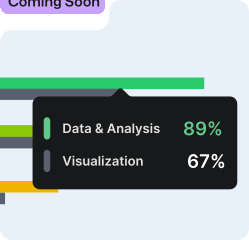
Analyze the moments that
matter most in your user
experience.
What is the red route method?

The red route method identifies the user tasks that are performed most frequently and by the highest number of users, the flows that create the product's core value. It is applied by analyzing user behavior to determine which tasks must be completed quickly, clearly, and reliably. This matters because even small barriers in red routes have an outsized negative effect on satisfaction, adoption, and retention.
What is sketching red routes?
Sketching red routes refers to mapping product tasks or features into a priority matrix based on two variables: frequency of use and number of users who depend on them. By plotting tasks visually, teams immediately see which interactions are mission critical, which are niche, and which create unnecessary complexity. This clarity strengthens decisions about where UX, design, and engineering effort will drive the highest user and business impact.
What are red routes in UI/UX?
Red routes in UI/UX are the essential workflows that users must complete smoothly in order to gain value from the product. They are identified by looking at high-frequency, high-dependency actions rather than edge-case usage. This matters because optimizing red routes directly improves the core experience while preventing effort from being diluted across low-impact features.

